Loneliness: Worse Than Smoking

What could be worse for your health than smoking fifteen cigarettes a day or scrapping your exercise program? A study by Juliana Holt of Brigham Young University of 300,000 people over 7.5 years found that it is feeling lonely and isolated. Loneliness is twice as bad for your health as being obese.

From grade school to retirement home, we seek friendships not so we can live longer but because we crave someone to talk to, depend on and enjoy. "Friendships are so valuable," Dr. Kelli Harding of Columbia says, "as a medical doctor, I wish I could prescribe them for everyone." Having good friends and keeping them must be a priority in addition to healthy eating, exercise and stress reduction.

An 80-year study from Harvard University revealed those having the most satisfaction in their friendships at age 50 were the healthiest at age 80. In keeping with this trend, the famous Framingham Heart Study reported that participants who had a good listener in their lives protected them against dementia.

- Phil Brewer 

Mayor of New York City Announces Dietary Changes for New Yorkers

At a recent press conference (Feb 8), the new Mayor of New York City, Eric Adams, made a major policy announcement supported by some of the most prominent hospitals of the City.

He said, " Our current disease epidemic, centered largely on chronic diseases is no longer sustainable. The medical symptomatic management of these common diseases captures 86% of our national medical care budget without affecting medical cures which remain largely elusive and rare. We need to shift from foods that feed our chronic diseases to foods that prevent, arrest and reverse them."

Eric Adams, the new Mayor of New York City, announced the important shift towards a healthier diet for New Yorkers. Let him describe it for you. See clips above.

Meat, Mortality and COVID-19 Risk

The Quarterly Magazine GOOD MEDICINE published by the Physicians Committee for Responsible Medicine reports in its Winter 2022 issue (p. 8):

“An unhealthy diet kills more people globally each year than tobacco smoking, according to the Global Burden of Disease study, which evaluated the major foods and nutrients in 195 countries. The study found that 11 million deaths annually—10 million from cardiovascular disease alone—are associated with poor nutrition Among the biggest risk factors are the lack of plant-based foods and the overemphasis on meat and dairy products.”

“More meat means more death and disease,” says Zeeshan Ali, PhD, Kick Start India program specialist at the Physicians Committee. “The meaty Western diet contributes to take hold in India, which has put the country in the grips of worsening heart disease, diabetes, and obesity epidemics.”  

However, India isn’t the only country facing health problems from meat imports. Research published in the British Medical Journal Global Health shows that the global increase in meat consumption has led to a sharp increase in deaths from colorectal cancer, diabetes, and heart disease worldwide.”

“Decades of research show that a plant-based diet can play a role in preventing and improving common chronic diseases, such as cardiovascular disease, diabetes, Alzheimer’s disease, kidney disease, and even improve COVID-19 outcomes. The COVID Symptoms Study, which included more than half-million participants, found that people eating more fruits and vegetables, and plant-based foods in general, had a 41% lower risk of severe COVID-19. Evidence strongly suggests that addressing underlying health conditions with a plant-based diet would not only reduce the likelihood of severe infection and death from COVID-19, over time it may also help vaccines to work better.

“In addition to saving lives, a vegan diet saves money as well. A recent study in The Lancet Planetary Health looked at 150 countries and found that the most affordable diet is one built from plants.”

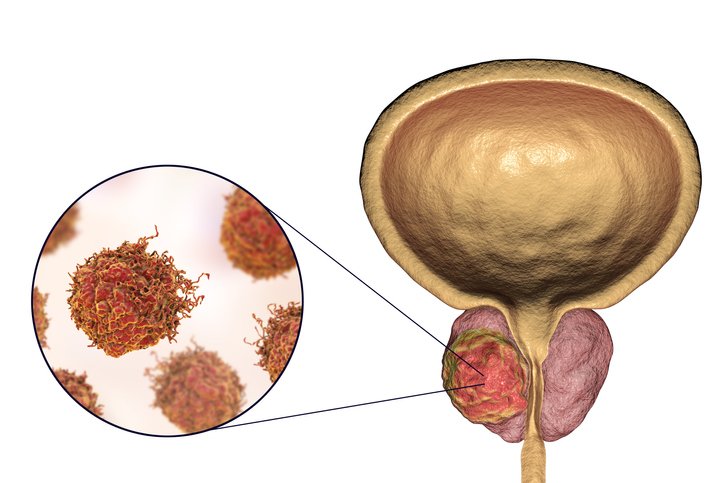
Diet and Prostate Cancer

Several new studies strengthen the positive diet – prostate cancer relationship.

#1 Reported in Cancer Medicine [2021;10(20):7298-7307], a major study known as the Japan Collaborative Cohort Study with more than 26,000 participants, showed that those who consumed the most milk had a 37% higher risk for developing prostate cancer than those who consumed less milk.

#2 Reported in the Nutrition Journal [2016;15(1):91-99], this major meta-analysis combining 11 prior studies had convincingly shown the positive relationship between dairy products and prostate cancer. The researchers suspect as a possible mechanism behind the increased risk the higher insulin-like growthfactor-1 (IGF-1).

#3 Reported as an abstract in the Journal of Urology [2021;Sept.1], the researchers followed more than 47,000 men comparing plant-based diet intake and prostate cancer incidence and mortality rates as part of the Health Professionals Follow-Up Study. Adherence to a more plant-base diet lowered the risk of death from cancer as well as risk for total and advanced prostate cancer among younger men by 19%.                                                                                               

#4. Reported in the Journal Urology, [2008;72(6):1319-1323] Dean Ornish MD and his team showed that an entirely plant-based diet could dramatically improve the clinical course among men previously diagnosed with prostate cancer.

The Mediterranean Diet Myth: New Study by the Physicians Committee Reveals the Facts

Jenine had extra weight she wanted to lose. She was on medications to lower her cholesterol and blood pressure; she had inflammation in her knees, and she was tired and sluggish much of the time.

That’s when she heard about a Physicians Committee clinical research study comparing the Mediterranean diet with a low-fat vegan/whole food diet to see which was more effective for weight loss and heart health.

Half the participants were to be assigned to a Mediterranean diet, while the others were to start a vegan-whole food diet. After 16 weeks, they would switch to the opposite diet—giving all participants a chance to test both diets and allowing the research to compare them head-to-head.

The Mediterranean diet proved to be a failure. It did little to improve her health. But after switching to the vegan-whole food regimen, Jenine began quickly losing weight and experiencing other health improvements.

“The vegan-whole food diet was way better for me. I lost more weight—about a pound a week—and felt better.,” says Jenine. “I think I’m getting rid of all the animal products and the dairy especially, as well as the refined foods. You see, the vegan diet emphasizes a low-fat regimen, while on the Mediterranean diet you eat a lot of fat.”

She was able to stop taking medicines for cholesterol, blood pressure, and heartburn. Other participants reported similar results.


Vegan beats Mediterranean

The vegan diet used in the study eliminated animal products and focused on fruits, vegetables, whole grains, and legumes while minimizing the use of added oils. The Mediterranean diet followed the protocol used in the classic Mediterranean diet study (PREDIMED), which focuses on fruits, vegetables, legumes, fish, dairy products, and extra-virgin olive oil, and includes limited amounts of red meat and eggs.

Neither group had a calorie limit. Participants did not change exercise or medication routines unless directed by their personal physicians. They followed each diet for separate 16-week periods.


Dramatic Results

The results were dramatic. Participants lost an average of 13 pounds on the vegan diet compared with no significant weight loss on the Mediterranean diet. The vegan diet also decreased total cholesterol by nearly 19 points, compared with only 3 points on the Mediterranean diet. The findings were published in the Journal of the American College of Nutrition (Barnard ND et al. 2021; 1-13.)

“Previous studies have suggested that both Mediterranean and low-fat vegan-whole food diets improve body weight and overall health. But until now, their relative efficacy had not been compared in a randomized cross-over trial,” says study author Hana Kahleova, MD, PhD, director of clinical research for the Physicians Committee. “We decided to test the diets head-to-head and found that the vegan diet is more effective for both weight loss and cholesterol control.”


Mediterranean Diets Fail in Weight Loss Studies

The Physicians Committee’s study confirms the findings of the Lyon Diet Heart Study and PREDIMED studies, showing that a Mediterranean diet is not effective for weight loss, unless calories are restricted, or exercise is added to the program.  In the PREDIMED study weight loss over the first three study months was barely half a pound, even though 90% of the participants had excess body weight at the start of the study. In the Lyon Diet Heart Study, a Mediterranean diet caused weight gain.

And Jenine?

“The study is over. But I’ve decided to stay vegan. It’s doing too many good things for my body. I feel stronger and better. When I was eating the way I used to eat, I would hit a wall at 2 pm,” she says. “Learning how to eat better has made a huge difference in my energy, and the inflammation in my knees has gone down. So, when I come back from teaching Zumba, I’m not crawling up the steps anymore because my knees hurt so bad. I’m now just walking up normally.”

(Published in the Spring 202 issue of the Good Medicine Journal of the Physicians Committee)


Vegan Diet Beats Keto Diet for Weight Loss

A vegan diet is more effective for weight loss than following a ketogenic diet, according to a recent study in Nature Medicine (Hall KD et al. 2021; 27 (2):344-353).

Led by KD Hall, MD, researchers at the Metabolic Clinical Research Unit of the National Institutes of Health, randomly assigned 20 participants to either a low-fat vegan-whole food diet or a low-carbohydrate diet high in fat and animal products but low in sugar and starch for a two-week period. They carefully tracked the calorie intake, body weight, blood sugar, and other biomarkers of the study subjects. They then switched them to the other diet for an additional two weeks for comparison.

Results showed that participants consumed up to 700 fewer daily calories during the low-fat, plant-based diet when compared with the low carbohydrate diet.  But there were no differences in satiety: the vegan diet allowed people to eat less food without hunger. While both groups lost weight, only the low-fat diet resulted in significant reductions in body fat.

Dr. Hall’s presentation at a recent major Conference on Nutrition in Medicine can be viewed at Nutrition CME.org “Keto Controversy: What you need to know.”

(Both research summaries published in the Spring 202 issue of the Good Medicine Journal of the Physicians Committee, Washington, DC)